If someone had asked me a few years ago what I wanted to be when I grew up, I would never have said “electronics engineer.” I wanted to be a biologist.
When it came time to choose a track in high school, I ended up in Information and Communication Technology almost by chance. My friends were going to choose that track, and I figured that if I didn't like it, I could always switch.
The first year didn't help much. We started with programming, and I hated it. During class, I understood everything, but when I was faced with a blank screen and had to write my own code, I froze. I felt like I wasn't smart enough, that I just wasn't cut out for it.
Looking back, I realize that we often confuse frustration with incompetence. Because understanding an idea and actually creating something from scratch are two completely different challenges. I didn't know that at the time; I just thought the problem was me.
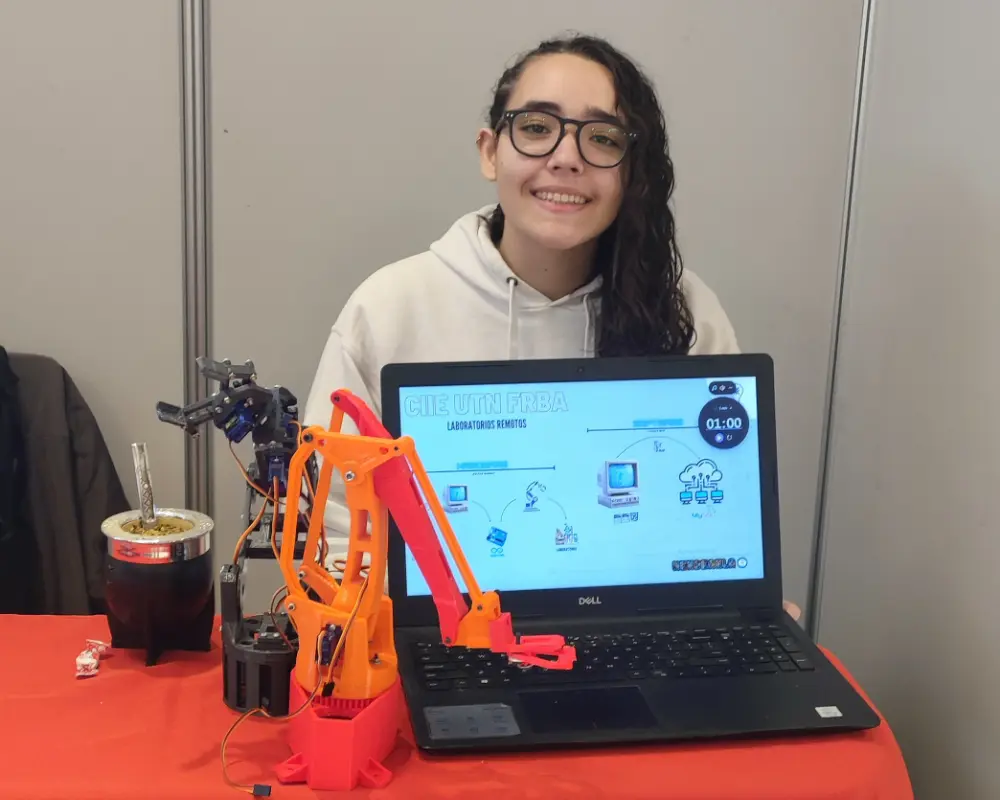
Everything changed when I discovered the Arduino platform.
For the first time, programming was no longer just text on a screen; it began to take on a tangible form. Every line of code had a purpose: to turn on a light, to move a motor, to bring an idea to life. Suddenly, I wanted to keep learning. I spent an entire summer building projects, and at just 16 years old, I enrolled in a college extension course where I was the only minor. After spending the whole day at school, I’d stay three more hours learning electronics simply because I loved it.
But over time, I discovered that there was something I was even more passionate about than building robots.
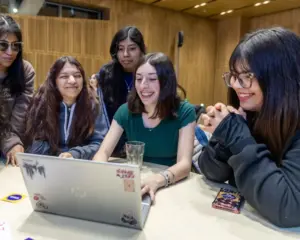
I've always enjoyed explaining things. As a kid, I was the one who would summarize things for my classmates and try to find different ways to help everyone understand a topic. When I started volunteering, leading workshops, mentoring, and giving talks, I felt the same enthusiasm I'd felt the first time I programmed an Arduino.
That's when I realized that my role wasn't just to develop technology, but also to make it accessible to others.
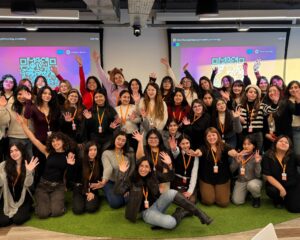
Since then, I’ve tried to say yes to every opportunity to share that enthusiasm. For years, I dedicated my time—entirely on a volunteer basis—to leading robotics workshops, online courses, student activities, and mentoring sessions. Today, I’m a co-founder of Women in Robotics Argentina (the regional chapter of the global community that brings together women and non-binary people who are involved in or want to get involved in robotics), and I remain convinced that sharing knowledge is one of the most powerful ways to transform lives. I never saw it as a sacrifice. On the contrary, seeing someone discover a new passion or find the courage to try something they once thought impossible is one of the greatest rewards this profession has given me.
However, there is one thing that never completely went away: imposter syndrome.
Even today, when I receive an important email, part of me thinks there might have been a mistake. When I won a scholarship to attend an international conference in Singapore, that’s exactly how I felt. I cried with joy, but I also thought that another email would probably arrive the next day saying they’d sent it to the wrong person. That second email never came.
Traveling to Singapore was much more than just attending a conference. It gave me confidence. While I was there, I gave a talk in English that I’d prepared practically overnight. I walked off that stage realizing something I’d had a hard time believing until then: we’re often much more capable than we imagine.
It happened again this year. When I received the email announcing that I had been selected to attend the IEEE International Conference on Automation Science and Engineering (CASE) in China on a scholarship, I cried again. I called my mom, my grandma, my cousin, and my best friend. I needed to share that joy because, honestly, I never stop being surprised when these opportunities come along.
But over time, I came to understand something important: the scholarship didn't just appear overnight. It was the result of many years of learning, volunteering, people who believed in me, and a deep desire to share my passion for robotics with others.
That's why I decided to create #IriVaAChina.
The excuse was to secure sponsors to bring mate and yerba to China, but the real goal was always something else: to show that robotics also has human stories. That behind every conference, every project, and every research effort, there are people who once doubted themselves, who learned by asking questions, and who grew thanks to a community.
I also want to highlight something that often goes unnoticed: there are so many women doing incredible things in technology. I’m not the first to win an international scholarship, nor will I be the last. However, those stories rarely reach those who are just beginning to consider whether this path is right for them.
If this post inspires even one girl to think, “I can do it too,” then this whole journey will have been worth it.
Because, in the end, the greatest recognition isn't traveling to an international conference.
It's realizing that sharing what you're passionate about can also change other people's lives.
By: Irina Terebiznik | CET Community
Edition: Chicas en Tecnología