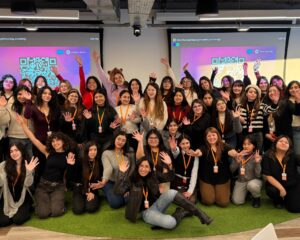

Through the program “Educación y tecnología: herramientas para una enseñanza inclusiva,” more than 150 teachers and professional educators from different areas of the country incorporated tools to identify biases, revise educational practices, and promote more inclusive educational experiences in STEM. With participants from 20 provinces, the program combined training, reflection, and concrete tools to bring these teachings to the classroom.
Artificial intelligence, robotics, and new technologies are transforming the way we learn, work, and produce knowledge. Facing these changes, schools have a central challenge: helping new generations so that they cannot only use technology, but also comprehend it, create it, and actively participate in the spaces where decisions are being made about its development.
But for that to be possible, it’s also necessary to help those who are in the classrooms.
Because of that, at Chicas en Tecnología we developed a program for teacher training “Educación y tecnología: herramientas para una enseñanza inclusiva”a new program aimed at educators and professionals tied to education across the country.
Training those who teach in order to transform opportunities
The inequalities in STEM don’t begin when someone chooses a career. They begin way before that, through experiences, expectations, and messages that can influence the way that girls, teens, and young women interact with technology.
Gender stereotypes, biases (including those we don’t consciously recognize), and certain practices could dictate the confidence, participation, and decisions that students make regarding their futures.
Because of this, working towards a more equal STEM education also implies reviewing what occurs in educational spaces and offering concrete tools to transform them for those who teach..
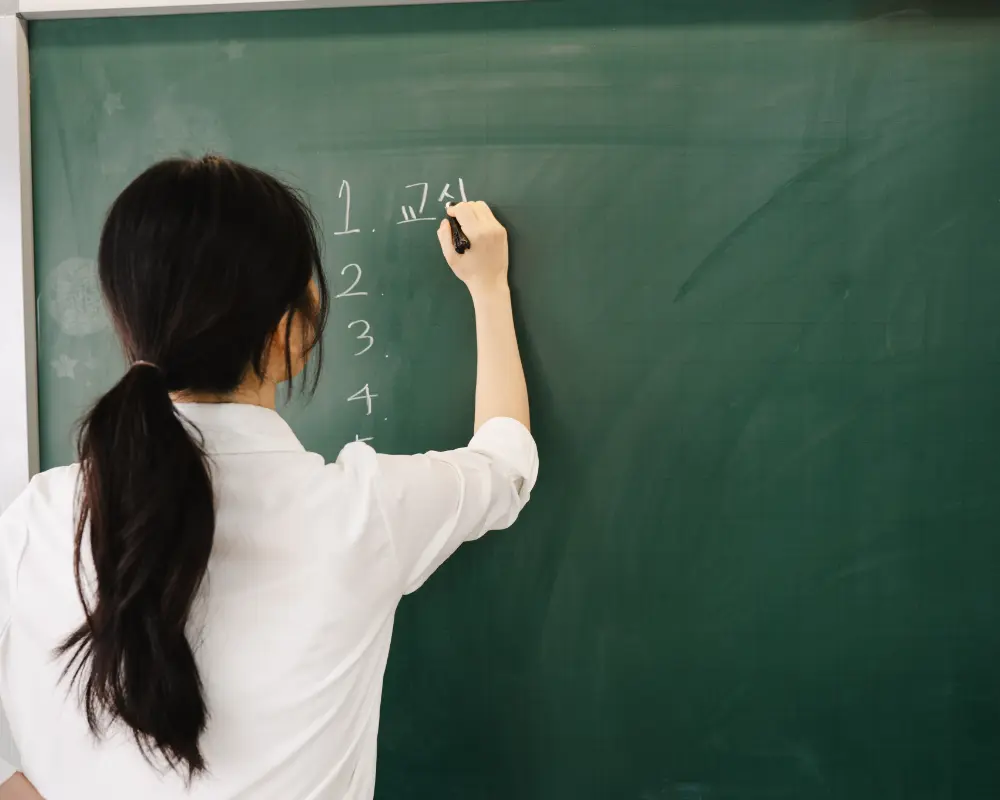
During the training, the participants reflected on how gender stereotypes and biases can be perpetuated in educational institutions and can appear in different aspects of the educational experience: from the materials to the curriculum to even the forms of evaluation, and the perceptions of the capacities of male and female students.
The objective is not only to incorporate these concepts but to put the reflection into practice. Review our own experiences, identify opportunities to improve, and design educational proposals that contribute to enriching the trajectories of students.
A program that changes training, practice, and community
The program was developed across various complementary components.
First of all, the participants took an asynchronous and self-managed virtual course, over the course of a month on Chicas en Tecnología’s virtual campus. Throughout the journey, they learned about gender stereotypes and biases in STEM and developed tools to promote more inclusive teaching practices with step-by-step guidance through the campus and Email.
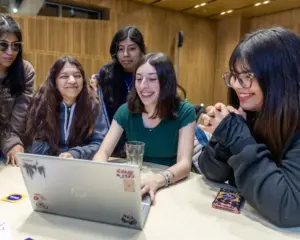
After that, those who participated in the course took part in the national virtual seminar “De la formación a la práctica: diseñando propuestas educativas con IA,”which took place on July 16th. The encounter allowed them to delve deeper into Artificial Intelligence and teaching practices, explore applications of AI for the design of learning sequences, and work in groups to develop teaching activities with AI.
Like that, the program sought to connect three dimensions: Learning, reflecting, and doing.
Because transforming educational practices also requires generating spaces where those who teach can get together, share challenges, and learn from other experiences.
The participation of educators from 20 Argentine provinces allowed us to open up this conversation and build a diverse community made up of educators from different levels, different management teams, Instructional coordinators, tutors and facilitators, trainers, and educators in non-formal educational settings, among other roles related to the field of education.
From reflection to the classroom
One of the challenges of any teacher training program is ensuring that what is learned transcends the training setting and is effectively applied in the classroom.
In this experience, the results show that this transition began to take place. 88.8% of the participants stated that training led them to critically reflect on their own practice.
And some of the experiences and some of the experiences shared clearly illustrate what that reflection means in specific situations.
During one of the co-creation activities, a teacher reviewed the characters in an educational resource she had created and identified a bias she hadn’t noticed until then:
“Nacho plays video games and wants to create his own video game (Programming), while Sofia wants to be a web designer and create videos ( Creative and Aesthetic process). Without realizing it, I reproduce the pattern ‘Boy = Programacion/ Girl = Design’.”
The observation shows that biases do not always appear in an obvious or intentional way. They can be present in everyday decisions, in the examples we choose, in the characters we create, or in the expectations we convey. Recognizing them is the first step to transforming them.
Another participant shared how she applied what she learned in the course to a literature project. After analyzing El almohadón de plumas, by Horacio Quiroga, she identified an opportunity she had previously overlooked: working with her students on the representation of women within the text. Building on that reflection, she discovered new resources for addressing the topic, such as, The Thrilling Adventures of Ada Lovelace and Charles Babbage,by Sydney Padua, which combines history, science, and fiction around the lives of Ada Lovelace and Charles Babbage.
It is these intersections between theory and practice that allow a training program to become an opportunity for transformation within the classroom.
An experience highly valued by its participants
Participant feedback also reflects the value of the program.
The 82.6% rated the overall experience a 9 or 10 out of 10. In addition, 93% expressed interest in participating in future Chicas en Tecnología programs..
Testimonials collected during and after the program particularly highlight the quality of materials, the clarity of the content, and the support provided throughout the process.
“I loved the program, the campus, and the quality of the educational materials shared. I hope that this is just the beginning of continuing my professional development with you. Thank you for the space for reflection; it was a very valuable journey.”
For other participants, the support was key to sustaining the process:
“I really liked the program, and the follow-up during the course helped me stay on track.”
This feedback shows that training also involves providing support: offering quality content, creating spaces for exchange, and supporting participants so they can master new tools and apply them in their own contexts.
Transformation also begins with those who educate
At Chicas en Tecnología, we work to help young women engage with technology as a space for creation, participation, and social transformation. To reach this objective, we believe that it’s fundamental to work not only with young women but also with the ecosystems that support them.
An inclusive STEM education requires educators to be equipped with the tools to recognize barriers, challenge biases, and create new opportunities.
The experience of this training reaffirms the importance of continuing to build these spaces, supporting educators, connecting experiences from different regions, and providing tools that can become new practices both inside and outside the classroom.
Because transforming education also means transforming the possibilities of the future.
And when educators have new tools to do so, every classroom can become a space where more young women find the confidence and opportunities to imagine themselves creating technology.