
The Artificial Intelligence (AI) is no longer a thing of the future: it is changing how we work, how we learn and how we make decisions today. But this change is not neutral. If women are not part of this process - or are in an unequal position - there is a risk that the technology that defines the world to come will also reproduce the inequalities of the past.
In this article we explain what is artificial intelligence, The report also shows how it impacts on the workplace, what risks exist for women, and why education is key to building a more just future.
What is artificial intelligence?
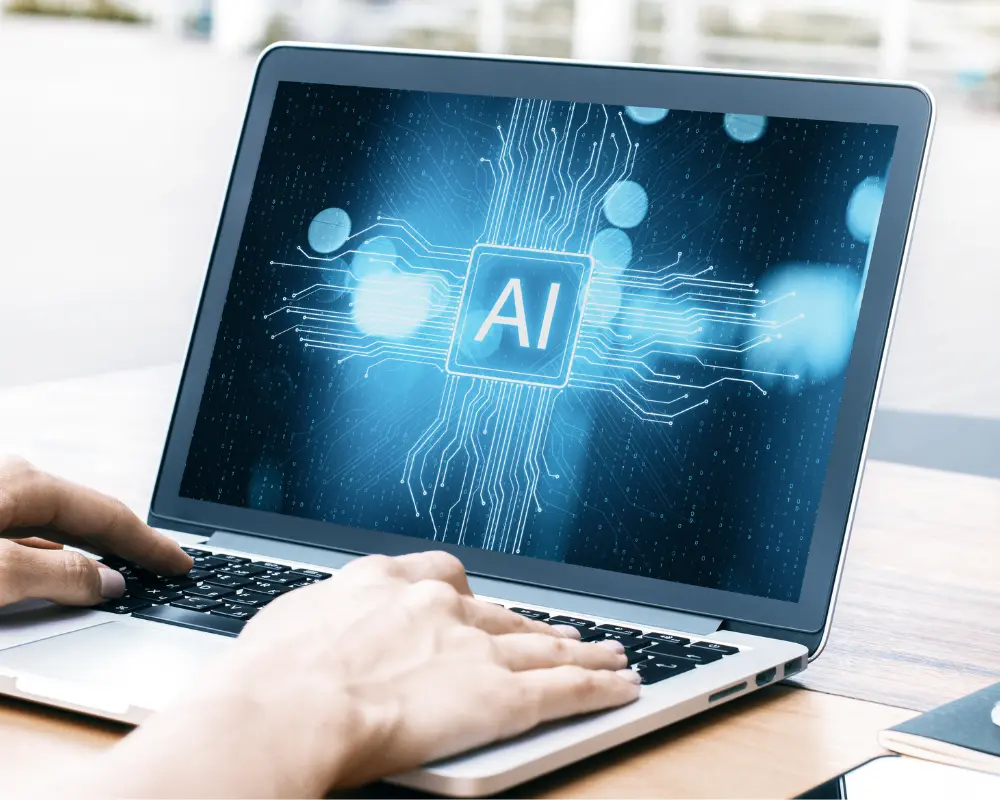
Artificial intelligence is a technology that analyzes information, learns from data and automatically provides answers to make decisions. In simple words: it is a tool that guides people to solve problems, save time and do tasks faster and more efficiently. However, it is not exempt from making mistakes.
Today AI is already in many parts of our lives:
- When we use a virtual assistant.
- When a platform recommends what to see or what to buy.
- When a company uses systems to select personnel.
- When an app helps us to study or work.
AI not only processes data: it mediates our relationship with the world. That is why it is so important who creates it, how it is trained and from what point of view it is designed.
Predictive AI vs. generative AI
Predictive AI analyzes past data to anticipate what is most likely to happen (e.g., forecast sales or detect risks). In contrast, generative AI creates new content such as text, images or code from what it learned.
Both are used today in work and education, but generative is the one that is most visibly transforming how we produce, learn and make decisions.
Artificial intelligence and labor: a change of era
We are living a hinge moment in the world of work. Artificial intelligence is transforming the types of jobs that exist, the skills that are needed, and the way organizations and institutions are organized. Many repetitive and manual tasks are being automated. That doesn't mean that people are disappearing from work, but it changes what is expected of them.
AI can be in charge of processing data, answering queries, automating flows and organizing information. While people can focus on thinking, creating, deciding, solving problems, providing empathy and judgment.
The real human value in this new scenario lies in critical thinking, creativity and the ability to use technology intelligently.
Future of work and artificial intelligence: not just for those studying technology
Technology is often associated with those who study programming or engineering. But that is no longer the case. According to the World Economic Forum, In fact, most of the jobs that are going to grow by 2030 will be linked to technology, even if they are not STEM careers.
For example:
- In human resources, AI is used to select people and automate processes.
- In marketing, it analyzes data and behaviors.
- In education, it personalizes learning.
- In health, it helps to diagnose.
It doesn't matter what you study: you are going to work with technology. That is why it is key that all people, and especially women, have access to these skills.
How does artificial intelligence impact women's future careers?
Today, only the 22% of the people working in artificial intelligence are women (Vass Foundation, 2024). And this is not a minor fact: AI is trained with data and created by people based on their experiences and beliefs. If the majority of those who design this technology are men, there is a risk that gender stereotypes will be reinforced, women's realities will be made invisible and inequalities will be reproduced.
As computer scientist Anita Borg used to say, technology is not neutral. It reflects the world of those who build it.
And it's not just about the impact of how AI is used, but also about who is being able to build careers, income and leadership in this new digital economy. Women are in the minority in one of the fastest growing and best economic opportunity sectors in the world.
Early education and access to training: the key to changing the future
For women to be part of the technological future, it is not enough to motivate them individually: it is necessary to transform the system that has historically left them out. This implies guaranteeing references, access to quality training and the development of confidence in their skills from an early age, but also changing the rules of the game in the educational, labor and productive spheres.
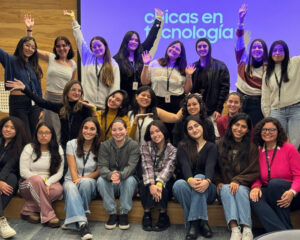
From Girls in Technology, In order to reduce the gender gap in technology, we work closely with companies, educational institutions, social organizations and the public sector to accompany girls and young women in their training and expand real opportunities for the insertion, development and leadership of women in the technology ecosystem.
AI is not coming to replace us. It is coming to amplify what we can do. But it will only be a tool for equality if women are in the process: learning, creating, deciding and leading.
The future of work is here. Now it's time to make sure it's a future with more women, more diversity and more opportunity for all people.
Do you want to know all the news about our organization?