
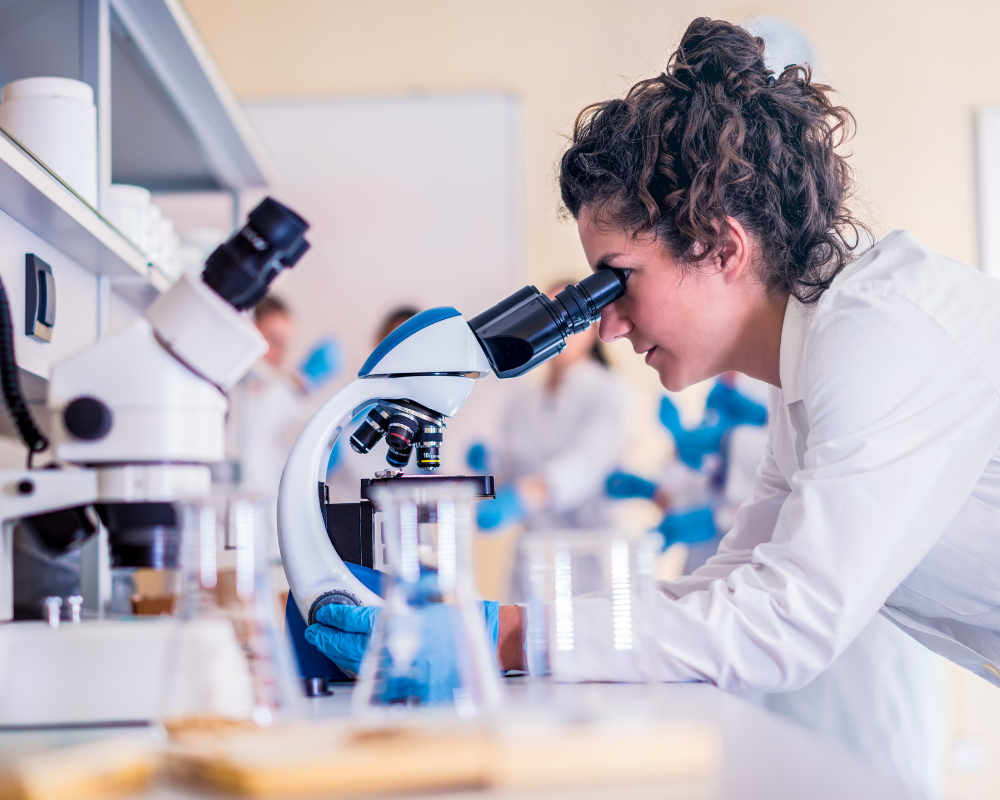
Each February 11, the International Day of Women and Girls in Science invites us to think about who is doing science today, who is left out and what we need to change so that more girls and young women can imagine a future in the scientific and technological world.
Women represent only 1 in 3 researchers globally (UNESCO, 2021), a figure that, while growing progressively, reflects a gap that begins long before professional life.
Science is not neutral: it is built from the views, questions and experiences of those who do it. And when those views are diverse, so are the solutions.
STEM vocations are built from childhood onwards
Interest in science and technology does not appear overnight. STEM vocations are built with time, encouragement, confidence and, above all, with real opportunities. Childhood and adolescence are key stages in this process: it is there that many girls start or stop imagining themselves as scientists, programmers, engineers or researchers.
However, gender stereotypes continue to set invisible boundaries. What is expected of girls, what models they see, what spaces they feel belong to them. Accompanying the development of STEM vocations involves actively working to break down these barriers and open up new horizons.
The power of referents
Seeing other women doing science matters a lot. Knowing women who research, innovate and transform realities (or who have done so historically) allows girls and young women to recognize themselves, identify with them and encourage them to say: “I can be there too”.
Representation is not only symbolic: it is a concrete tool for building belonging and strengthening confidence in one's own capabilities.
More women in science for more diverse solutions
Promoting the participation of more women in science and technology is not only a question of equity. It is also a necessary condition for the development of more representative, inclusive and fair solutions.
When voices are missing, questions are missing. And when questions are missing, science becomes incomplete. The diversity of experiences, contexts and perspectives enriches the production of knowledge and allows us to address social, environmental and technological challenges in a more comprehensive manner.
A more diverse science is a more powerful science.
Accompanying trajectories, not just awakening interests
Awakening interest is a first step, but it is not enough. Accompanying STEM vocations implies sustaining trajectories over time: providing training, generating community, offering references, building networks and creating safe spaces in which to make mistakes, learn and grow.
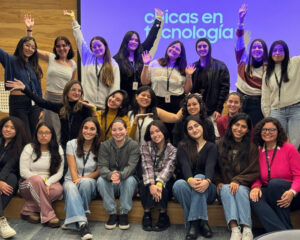
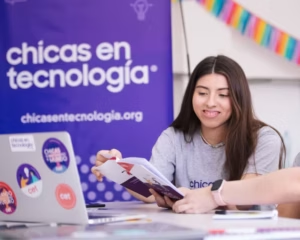
From Girls in Technology we believe in this continuous accompaniment, which puts girls and young women, their questions and their dreams at the center, and works to transform the structural conditions that still limit their participation.
Looking ahead
There is still much to be done. The gender gap in science and technology continues to be an urgent challenge that requires the commitment of multiple actors: social organizations, the education system, the private sector, the State and the community.
This February 11 is an opportunity to reaffirm a conviction: when we accompany girls and young women in the development of STEM vocations, we not only expand their individual possibilities, but also build a more diverse science, more representative and with greater social impact.
Because promoting more women in science is, in short, to bet on a better future for society as a whole.