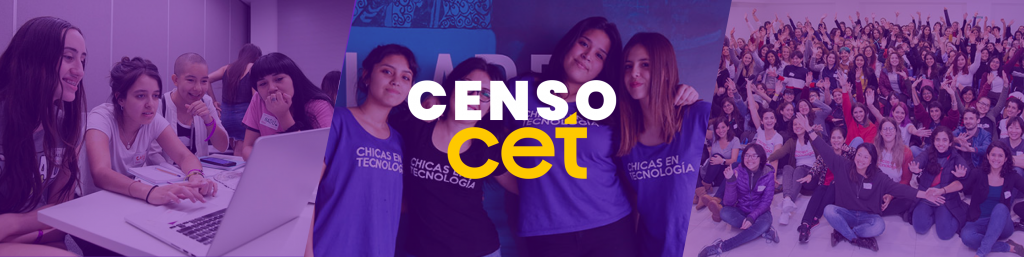

Girls in Technology (CET) partnered with the Gino Germani Research Institute to conduct a study on the gender digital divide among adolescents in Córdoba and Buenos Aires, Argentina.
The research aims to identify and describe the processes of gender inequality from childhood to youth, as well as to characterize such trajectories in young women with high and low interest in the area, in relation to an academic and/or labor future in the STEM area (Science, Technology, Engineering and Mathematics).
“Gender digital divide in adolescent girls in Córdoba and Buenos Aires”.”1 is based on a variety of research methods, including interviews with adolescent girls in order to reconstruct the trajectories of technology appropriation in light of stereotypes and social representations in relation to gender and technology.
At the same time, the classification by social class of the interviewees was included in order to take into account the intersectionality of the class and gender variables in the digital inequality processes.
The research, carried out by Milagros Gimenez and Florencia Deleo, on behalf of CET, analyzes the digital inclusion of people who identify with the female gender based on the five “C's” recognized by Bradbrook and Fisher (2005) as central factors in this process: connectivity, capacity, content, trust and continuity.
Some turning points in people's trajectories with respect to technology were identified, such as the acquisition of the first devices, the influence of role models, the distribution of netbooks in schools, and the impacts derived from the pandemic. At the same time, we observed the appearance of early obstacles in relation to technology, such as the fact that at the age of ten, girls abandon the use of computers for gaming due to a set of factors that make them perceive this sphere as a “masculine” one.
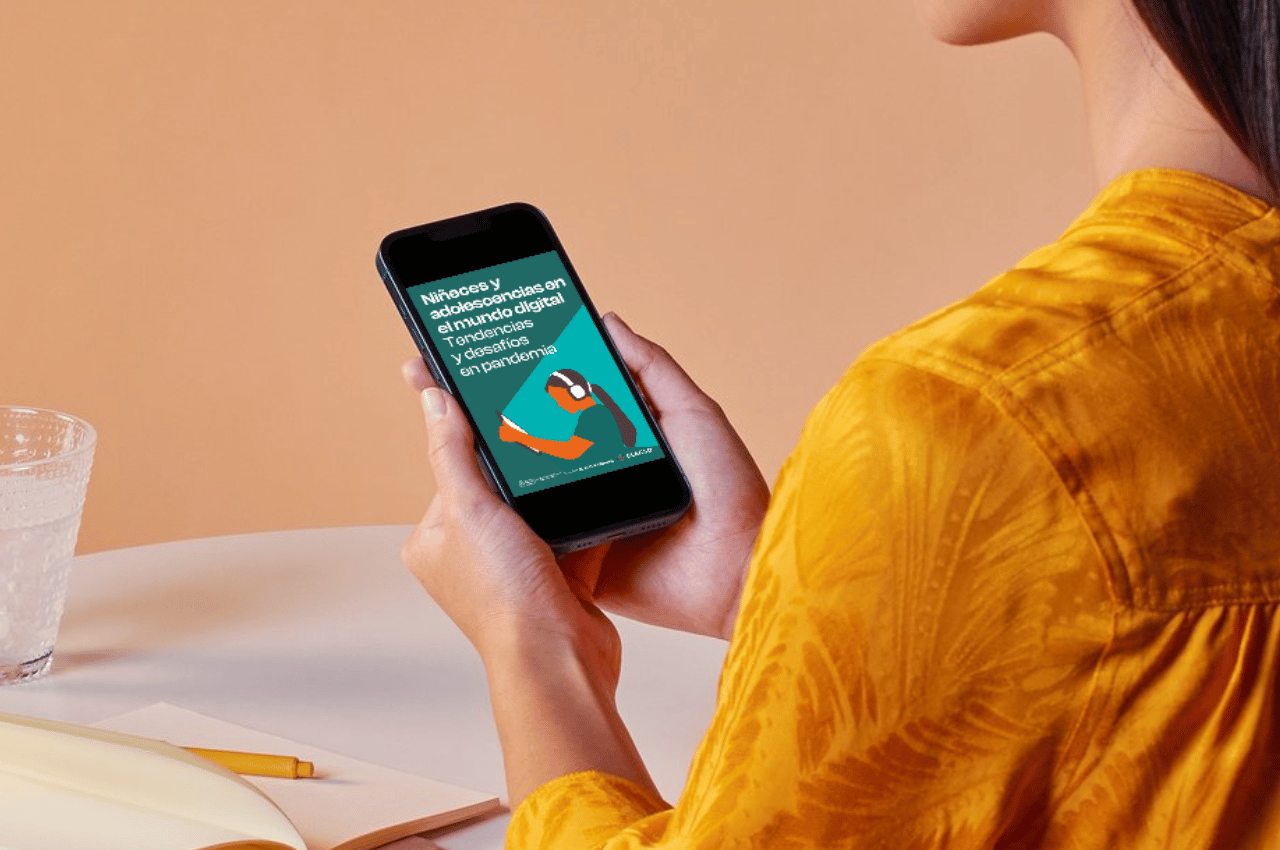
The research material is included in a chapter of the latest digital book published by CLACSO, “Childhood and adolescence in the digital world: trends and challenges in pandemic.”2 and can be read here.
Project “Gender digital divide in adolescent girls in Córdoba and Buenos Aires”. Director: Matozo, Victoria. Team: Pablo Molina Derteano, Milagros Giménez, Sheila Amado, Marcelo Boyle and Florencia Fernández Deleo. Call “Children and adolescents in the digital world: Characteristics, trends and challenges before, during and after the pandemic” of the National Secretariat for Children, Adolescents and Family (SENAF) and the Latin American Council of Social Sciences (CLACSO).
2. Childhood and adolescence in the digital world. Trends and challenges in pandemic (2024) Chapter: Gender digital divide in adolescent girls in Córdoba and Buenos Aires. Authors: Victoria Matozo, Pablo Molina Derteano, Milagros Giménez, Sheila Amado, Marcelo Boyle and Florencia Fernández Deleo. Autonomous City of Buenos Aires : CLACSO; Autonomous City of Buenos Aires : National Secretariat of Childhood, Adolescence and Family - SENAF, 2024. ISBN 978-987-813-714-8.