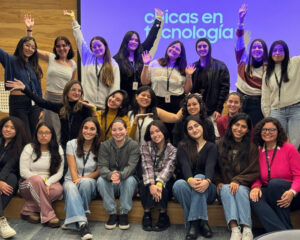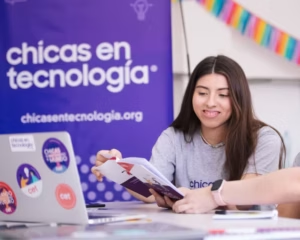


The young women who participate in our programs start their journey through the CET route, a set of free training proposals that allow them to build their present and future in the technological field. Through different stages, each one traces her own path to become a creator of technology. At CET, we accompany their trajectories and promote the opportunities they find in STEM disciplines. As part of the follow-up and continuous support, we designed and developed, together with Salesforce, a management platform implementation process tailored to the needs of the organization. The work was carried out jointly by volunteers from the company and the CET team over the course of a year so that the tool would optimize the possibilities we offer to the young women in the region. This development allows us to integrate data on the trajectories of the participants of our programs so that they receive more and better training proposals: we register the passage of each participant through the CET Trajectory, we know the skills in which they are trained and those they wish to develop, and we manage the joint work with other actors of the ecosystem so that they can grow professionally.
The implementation of Salesforce is another step towards a comprehensive approach to the gender gap in technology that enables the generation of inclusive environments where women in all their diversity can lead professional spaces. Through the CET Trajectory, young women in the region have access to free and free proposals of motivation to get to know the technological world and its possibilities, from initial and specific training to take their first steps as technology creators and then specialize in their areas of interest and -as an advanced part of the Pathway- participate in proposals focused on their future development as professional women in technology.
Chicas en Tecnología works in a systemic way with more than 100 partnerships between the public sector, companies, academia and international organizations. In the last year, 4,000 young people from 15 Latin American countries created more than 300 technological solutions to solve problems in their communities.