
Text: Julieta La Casa
On the fourth Thursday of April, the International Day of Girls in ICT (Information and Communication Technologies), an initiative promoted by the International Telecommunication Union to encourage young women to develop in these disciplines.
The gender gap in technology is a structural problem that needs to be addressed from multiple angles. The challenge does not begin when the rates of women's participation in professional jobs show that they are always in the minority. On the contrary, it is necessary to look at the beginning of this whole issue, when at a very early age, the distinctions between girls and boys, the stereotypes rooted in each gender identity, and the type of incentive and education they receive begin to mark paths of advantage for some, and exclusion for others.
Women face barriers to access and participation at different times in their personal, educational and working lives. It is not enough to arrive, to be there, to be part of that minority that has achieved its goal. In the case of STEM areas (Science, Technology, Engineering and Mathematics), once a woman occupies a place within the academic or professional environment, she must overcome significant obstacles related to progress, decision making, economic development, validation in front of her peers and superiors, and access to leadership roles. As the research points out in its title “A potential with barriers”, The contribution that women can make in strategic areas such as Information and Communication Technologies is limited from an early age, when there are numerous barriers of choice that lead to girls' lack of interest in science and technology:
- Family and social stereotypes
- Influence of family tradition on inherited and conventional careers.
- Psychological, socialization and pedagogical factors that contribute to women underestimating their own abilities for STEM disciplines.
- Differential education provided to women and men based on their gender
- Lack of role models
Over time, these barriers are transformed into data that attempt to quantify the inequality of opportunities based on gender. For example, in the STEM university system in Argentina, 33% of women and 67% of men are registered as students. Meanwhile, of the total number of graduates from these careers, 35% are women and 65% are men. These indicators are an alarm of disadvantage when it is estimated that the skills of the future of work are closely linked to the use and creation of technology and to digital literacy.. It is not necessary to make futuristic predictions to know the possibilities that women miss out on by not being part of the STEM world. In Argentina, for example, according to data from the Argentine Software Industry Chamber, there are usually 5,000 unfilled jobs, and that number grows to 15,000 when considering the demand for IT professionals in other industries. When we talk about the gender gap as a structural problem, we also refer to the fact that it is women who are left out of these growth opportunities, but also the industries, which do not have the human potential to generate innovation. It is the economies of the countries that waste talent in productive sectors such as the knowledge economy, which generates exports, competitiveness and quality employment. And it is societies, which must to bet on integration in order to achieve social wellbeing and inclusive development..
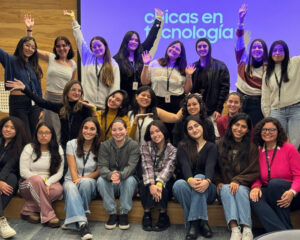
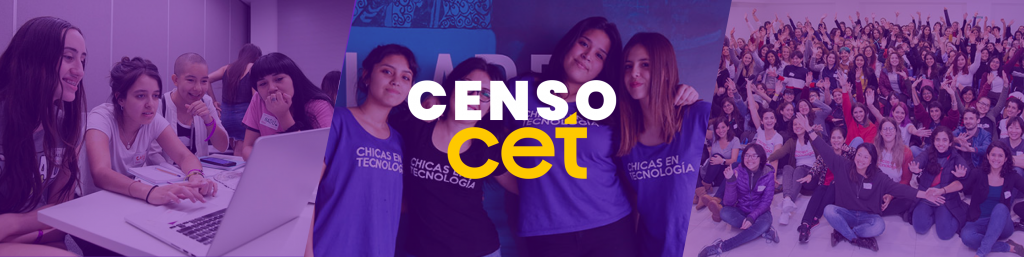
To reverse this trend, there are many areas from which to act and promote technological progress with a gender perspective, reducing biases and promoting diversity. In Argentina and Latin America, Chicas en Tecnología works with a comprehensive approach that involves the entire technological ecosystem, from education to the public and private sectors. The organization seeks to promote a cultural change so that more and more people who identify with the female gender create and lead technological solutions that can promote social improvements. Since 2015, through free training proposals, more than 11,600 young people from 18 countries in the region identified problems in their communities and created technological solutions to solve them. They began their journey in the technological world to enhance their skills and their purpose of social impact and may be the next generation of women leaders in technology. May this International Day of Girls in ICT serve to reinforce social commitment and may more and more young women in the region opt for a future in STEM disciplines.