
Chicas en Tecnología and Mulesoft called for the creation of an online repository with free and open access information on STEM (Science, Technology, Engineering, Mathematics) and gender issues.
Cultural and systemic changes are processes that are built through the collective work of multiple actors involved with a mission. Girls in Technology knows that individual effort alone is not enough to generate social impact and makes this evident in each of the events The Foundation organizes a series of meetings to which various sectors of society are invited to work, reflect and build a context of equity where innovation and development are possible. With this idea as a guide and in alliance with Mulesoft the first #CompilatónCET was a key event in terms of collective work, as the general public was invited to identify, classify and systematize sources of information on the gender gap in science and technology with the purpose of generating an repositoryThe availability of these updated and accessible data is fundamental to be able to measure the problem and implement public policies and changes in various sectors of society that contribute to reduce this gap. Having this data updated and accessible is essential to be able to measure the problem and implement public policies and changes in various sectors of society that contribute to reducing this gap.
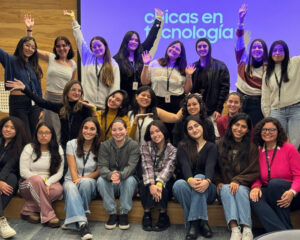
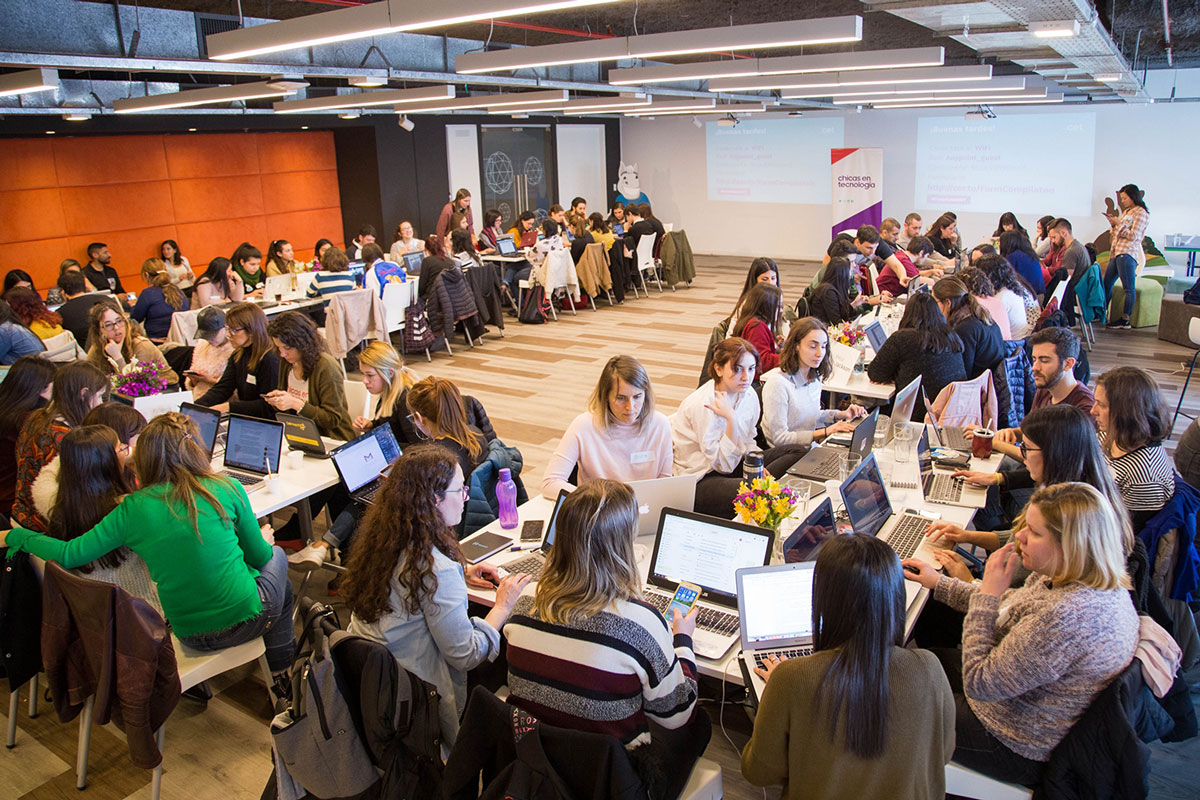
The offices of Mulesoft in the City of Buenos Aires hosted this multidisciplinary meeting: the Compilatón was attended by a heterogeneous audience that included journalists, researchers, teachers, programmers, designers, university students, CET ambassadors and representatives from organizations and institutions such as the Hurlingham National University, Wikimedia y Systems. To start creating the repository, groups with different profiles were created, identified with names of women references In addition to working with sources of information, they were able to exchange experiences, generate new contacts, learn in depth about the impact of the gender gap in STEM (Science, Technology, Engineering, Mathematics) careers, and get involved with a community that actively participates to generate change with social impact.
In search of data
First, the context: “What is the gender gap in technology? Thanks to data that we ourselves have collected, we know that only 16% of the enrollments in public and private universities in the country in careers related to programming and technology are women. And in companies and public spaces where software is developed, this number may be even smaller. Women are outside those spaces where the technology that we all use to communicate, transport and relate to each other is generated and built”.”, he said Consuelo Lopez, The organization is a volunteer advisor to Chicas en Tecnología Programs, as soon as the Compilatón began. The organization allocates its programs to adolescent girls throughout the country so that they know that developing in science or technology is a valid option for them. But the challenge does not end there; it is necessary to work with the whole society to generate an inclusive proposal, where girls can become women leaders. “This led us to the need to generate data, reports, to ally ourselves with other organizations to be able to have a constructive debate on the subject, to talk about it in a well-founded way and to understand the causes of the gender gap in science and technology in order to propose concrete solutions”.”, Consuelo concluded.
The impetus behind this meeting came from Alejandra Gutierrez, Alejandra is a sociologist and teacher specialized in Comprehensive Sexuality Education and Education and New Technologies, volunteer of Chicas en Tecnología. Alejandra joined the organization in 2018 as a facilitator for #ClubesCET, a program that helps girls to become not only users, but also creators of technology. She also participated in the research that Chicas en Tecnología carried out together with INTAL BID, “A potential with barriers”, The company interviewed CTIM graduates, conducted a focus group and then analyzed and processed the information. “The Compilatón arises from the need to organize information for those who need it or are interested in the subject, but also so that those who make decisions or design social policies can find information that allows them to transform a situation of inequality into a situation of equity.”, explained Alejandra
After that, back to work. The #CompilatónCET took place in three stages: one of exploration, one of preservation of the sources and one of systematization through the uploading of information. The participants freely organized the work within each group: they divided up the sources to be classified, discussed which labels corresponded to each one and studied some of the materials in depth.
Anna Torres Adell, Executive Director of Wikimedia Argentina, was part of one of the groups: “It is a privilege to participate in this activity which is very important for the work that we develop from Wikimedia Argentina, the organization behind projects such as. Wikipedia. The collaborative construction of knowledge and having primary and secondary sources is fundamental to continue improving the articles that currently exist about women in STEM (acronym in English for Science, Technology, Engineering, Engineering and Mathematics) inside the encyclopedia”.
Alejo Zito, 29, studied film and worked in the audiovisual world, but over the years he chose to study Systems Engineering and is currently dedicated professionally to this discipline: “I noticed a big difference between what it's like to work in film and television and what it's like to work in engineering and systems. Those differences made me want to approach organizations like Girls in Tech. Now I work in a big company and in the team where I am we are all men. I find the Compilathon very interesting because even in my job they are always talking about diversity and how many women there are in the engineering teams and sometimes there are opinions that I don't agree with at all and I like to have support to be able to talk to my peers”.”. Esteban Wasinger also studied Systems Engineering but, as a Mulesoft volunteer, he had already worked alongside CET at the 2017 PUMM, which was held at the company's offices: “I really like the mission of Chicas to be able to reduce the gender gap in the world of technology, which is where I am most involved. I believe that there is no difference in people's capabilities because they are women or men, and if there is that difference it is because there is a preconception. In Mulesoft I have references, I would like to be like certain people, and they are women. I really think I would never be as good as those women so it's a preconception that has no basis in fact.”.
Sociology was also one of the disciplines present at the #CompilatónCET. Ana Rapoport has been working for 10 years at the National Institute of Technological Education (INET) and currently coordinates the Gender Equity Commission there: “We have been working on educational statistics and analyzing gender gaps in technical education for a long time, so this is a central issue for me, to have information in an orderly and neat way with official data. It seemed important to me to come and collaborate with this idea of gathering data and compiling it. Any public policy needs orderly, official and quality data to be able to plan”.”. The sociologist shared her experience with regard to the modality of work: “It is nice that these spaces are created, it seems to me that it is a new way of making public policy in a more transversal, dynamic way, with people who do not have to be experts or chosen from central places, but I think it is a very good idea that we can all build a policy from something as basic as information, which is also public. My team was varied and I think this is also refreshing and mobilizing for everyone. And the fact that key information can come out of it to think about a public policy seems to me to be a discovery”.”.
The result: the first breakthroughs. The collective achievements of the first #CompilatónCET were shared at the event with all the people who voluntarily contributed their time, experiences, concerns and convictions in an afternoon of collaborative work.
The teams reviewed, preserved, classified and systematized 270 sources in total and the most repeated tags for classification were: Inequality, Labor, Gender stereotypes/biases. 24.4% of the information collected was obtained from Reports while 20.2% from electronic journals.
Open and accessible data
The participation of the entire entrepreneurial technology ecosystem, volunteers, organizations, educational institutions, companies and the general public made it possible for the #CompilatónCET to complete the first chapter of this collective work. “The final product of the #Compilathon is a dynamic reservoir that does not run out today. Once we process the data we are going to make it open so people can consult it and continue to add information and sources to this large collective database.”, Alejandra Gutiérrez explained at the event. Therefore, in a second stage, the Chicas en Tecnología team processed the data, which is now online and open to the public: http://bit.ly/ReservorioSTEAM. The objective is that the repository continues to be enriched with the contribution of people interested in reducing the gender gap in science and technology and contributing to the development of a fairer, more equitable society with greater opportunities for those who are part of it.